Showing posts with label Paul Marin. Show all posts

Thursday, January 15, 2009

A Call to Action in the Morning Call

Article Link:

http://www.mcall.com/news/opinion/all-recon122908,0,6913426.story

ACTION TO TAKE: Please write POSITIVE comments on our need for rail to the Morning Call


Reconnaissance 2009

In 2009, start to make Valley's rail connections real

December 29, 2008

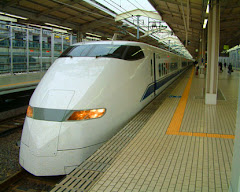
Imagine speeding over the land at 200 miles per hour, reading this newspaper while having a drink and chatting with your family or business associates in absolute comfort and safety.

That is quickly becoming the reality for the rest of the world.

Over the next decade, the Chinese government is planning to spend roughly $500 billion to construct an extensive high-speed rail network. They are hardly alone. Vietnam, Korea, Taiwan, Japan, Russia, Germany, France, Spain and others -- the list of countries investing in high speed rail is too long to print here.

Meanwhile, the United States spent just $1.3 billion on Amtrak in 2008, or about 2 percent of the federal transportation budget.

Amtrak has been on life support for decades, receiving just enough money each year to keep it from shutting down completely. Yet, despite aging equipment and slow service, more than 28 million people rode Amtrak last year, a record.

In the 1950s, America had the fastest and most luxurious trains in the world. That was then. Today European and Asian rail networks are extensive and growing with trains that can exceed speeds of 200 mph. In a competitive world economy, we are falling far behind.

In fact, we are the only large developed country in the world that does not use the tripod of transportation: air, roads, and rail. As author James Howard Kustler says, "The United States has a passenger rail system that Bulgaria would be ashamed of." This must change -- and it is.

This past November, despite a massive recession and state budge woes, California voters approved $10 billion in state bonds to construct a high speed rail system. The bonds will help to provide the local match for partnerships with other investors, such as Uncle Sam.

Other states are watching with interest. In the Midwest, 10 states have joined forces to plan an expansive rail network with a hub in Chicago. Texas has looked at high speed rail to link Houston, Dallas, Austin, and San Antonio. Virginia, Ohio, Colorado, and numerous other states are developing state rail plans to expand passenger rail service.

If Pennsylvania does not act quickly, we will be left behind when the federal government gets serious about funding passenger rail. Other states will have solid plans and environmental clearances ready, so they will get the infrastructure dollars.

And, the United States is falling behind the rest of the world in terms of transportation. China, for example, is investing hundreds of billions of dollars in high speed rail to link its cities.

When people visit the United States from other countries, they are often shocked by our lack of viable public transportation. They act as if a basic element of modern infrastructure is missing, as if we had opted not to build something as essential to them as hospitals or fire departments.

Pennsylvania is ideal for passenger railroads. We have areas of high population density, and many of our cities and towns are already linked by rail infrastructure. We have great downtowns that are perfect for rail stations. We also have experience with high-quality passenger rail. The Keystone trains between Harrisburg and Philadelphia zip along at 110 miles per hour.

Yet, there is a common belief in other parts of the country that the "northeast" rail network is complete just because we already have the Northeast Corridor connecting Boston to Washington D.C. We already have trains in New York and Philadelphia, so what else do we need?

The Lehigh Valley has more than 800,000 residents, yet we have no rail service. Meanwhile, cities like Norfolk, Va., and Phoenix, Ariz. are building light rail. This week, a new commuter train opened in Santa Fe, N.M., a city with only 72,000 residents ( Allentown has over 100,000). Clearly, our rail network is nowhere near as extensive as it needs to be.

A state rail plan is needed to bring rail service to all of Pennsylvania's population centers. Trains must be frequent, reliable, and fast. Such a network will help our local economies remain competitive, create jobs, reduce our dependence on foreign oil and will provide an option for residents to travel quickly and safely.

Paul J. Marin of Allentown is the chair of the Transportation Committee of the Lehigh Valley

Monday, November 3, 2008

THE FAST TRACK


Paul Marin has announced that "We are currently setting up a committee to work on the rail initiative starting in the next 30 days."


Stay tuned!!!!!!!!!


Tuesday, October 14, 2008

From the Morning Call:

Plan could bring commuter rail to Lehigh Valley in five years


Link to NJ Transit: Bridge panel would use millions in toll money to pay for it.
By Matt Assad Of The Morning Call
October 14, 2008


A plan to bring passenger railroads into the Lehigh Valley would tap the millions of dollars that motorists pay in Delaware River bridge tolls to fund a $100 million line that would link Easton to NJ Transit trains.

Talks to have the Delaware River Joint Toll Bridge Commission pay to extend a line 20 miles west from High Bridge, N.J., began two years ago and have been re-energized by high gasoline prices and highway congestion.

Such a deal would mean trains could be running into Easton in as little as five years, helping regional planners avoid what could otherwise be a 10- to 20-year wait to get enough federal funding.

But for now, the plan remains a concept awaiting the blessing of the governors of Pennsylvania and New Jersey, said bridge commission Chairman David R. DeGerolamo.

''The frustrating thing is if we had done this two years ago, when I first suggested it, we'd be close to having trains running,'' said DeGerolamo, who is also a Phillipsburg councilman. ''Now it's sort of in a holding pattern until we get some kind of direction from the governors. It's too bad, because I think we missed an opportunity.''

Chuck Ardo, spokesman for Pennsylvania Gov. Ed Rendell, said Rendell supports establishing the line into the Valley and the bridge commission is free to fund the construction if it chooses, but said the costs of running the railroad must also be considered.

''It's unquestionably a worthwhile project,'' Ardo said. ''No one has specifically approached the governor about it, but even if they do, funding is going to be an issue, not only for construction, but for ongoing operations.''

New Jersey Gov. Jon Corzine's office did not comment.

If the commission had approved floating $100 million in bonds as DeGerolamo requested, it would have had to determine whether it could repay them through existing tolls, increased tolls or by adding tolls to one of its 13 free bridges. That's still the case.

The issue of extending NJ Transit into the Lehigh Valley resurfaced in recent months, as Valley highways became more crowded with people commuting to New York City and New Jersey and gas prices rose to more than $4 a gallon.

Lehigh and Northampton counties along with the Lehigh Valley Economic Development Corp. have together committed $250,000 to pay for a study of what it would cost to extend the NJ Transit line through the Valley and what it would cost to operate.

But Paul Marin, a former Wall Street money manager now living in Allentown, says the line would be a small piece of a statewide rail network that he's been advocating throughout the region.

He's spent the past two months meeting with officials, including Pennsylvania Community and Economic Development Secretary Dennis Yablonsky and Transportation Secretary Allen D. Bieler. Last week, he made his plea during the annual Pennsylvania Planning Partners Conference in Canonsburg, Washington County.

''If we can build a statewide rail plan, then we are eligible for billions of dollars in federal money,'' Marin said. ''Locally, the toll bridge commission is an option that could have trains running within four years after floating the bonds. That would be ideal.

To continue reading the article :

http://www.mcall.com/news/local/all-a1_3rail.6623500oct14,0,7150225.story

Monday, September 29, 2008

ACTION ALERT

Northampton County Council Meeting:
Vote on Funding for the Planning Phase of a Unified Rail System
Thursday, OCTOBER 2 at 6:00PM
Northampton County Government Center
669 Washington Str, 3rd floor Easton PA

Paul Marin will be making his presentation and the council should be voting on a commitment of $75,000 toward the planning phase.

BTW: There were about 80 attendees at the gathering last Tuesday at the Third Street Alliance in Easton. Paul did a great job again. There was lots of healthy discussion, even a strong thought provoking comment questioning the effort. That was responded to by equally thought out comments.

Tuesday, September 16, 2008

More on the Open House Meetings.......


Fellow rail supporters,

It has been a long time coming, but we finally have a legitimate opportunity as citizens to affect a sea-change in the course of rail transportation in the Lehigh Valley. Paul Marin is on the Board of Directors of LANTA. He is also a member of the Transportation sub-committee of the Lehigh Valley Economic Development Corporation (LVEDC). He has gained the support of the LVEDC in funding a rail study that will provide an opportunity for the Lehigh Valley to partner with the ongoing study being prepared by New Jersey Transit (NJT) that will evaluate bringing rail to Phillipsburg. Our participation would assure that Easton, Bethlehem and Allentown are included as potential stops in that study. Obviously, Easton is the key link to this system.


The LVEDC has committed $100,000 to this effort. The study will cost $250,000 - the cost of one, modest suburban home in Forks Township. Further funding of $150,000 will be required to move forward. That money will be requested (in the amount of $75,000 each) by County Executives Don Cunnigham and John Stoffa from Lehigh and Northampton County Councils respectively. Lehigh County is probably solidly behind it. Our job will be to make sure Northampton County hears our message loud and clear.

Paul Marin has put his money where his mouth is by hiring Wallace, Roberts and Todd, Architects and Planners (WRT) of Philadelphia to do a preliminary PowerPoint presentation on the potential of rail in the Lehigh Valley. WRT is well known for it's planning of Inner Harbor in Baltimore and the Dallas Area Rapid Transit plan (DART). This PowerPoint will also be presented to County Council on October 2nd. Paul and I agree that you - the Easton transit-using community - deserves to have the presentation personally delivered to you so that you have all your questions answered before the funding request is delivered to the County.

It will be very important to show up in force at the County meeting to let the politicians know we are behind this modest investment to direct our future transit system towards rail and the economic benefits it will enable here. Please do everything you can to attend this presentation and let everyone you know in the Easton area who will be affected by this transit study to attend as well.

Also that same evening, as luck would have it (and coincidentally right next door to our meeting location) LANTA will be presenting their regional transportation plan update for the Lehigh Valley. There will be a presentation, an opportunity to review the plan and to make public comment. It would be great for as many people as possible to also attend part of this meeting.

Let LANTA know that a plan that does not include provision for future rail service is no plan at all. LANTA must be made to understand that they are a transportation agency - not just a bus company. We have a unique opportunity to drive the point home and we should take advantage of it.

I look forward to seeing all of you soon and working together - with Paul and all of you - to lead Easton and the Lehigh Valley into the 21st Century of transportation planning and economic success.

Dennis R. Lieb

Wednesday, August 13, 2008

Over One Hundred Area Residents Attend Fast- Track Rail Strategy Session at the Allentown Brew Works


Like all Americans, Lehigh Valley residents have been re-evaluating their transportation options, given rising fuel prices.

Over one hundred citizens looking for long term solutions, found hopeful answers at the Allentown Brew Works last evening, Tuesday, August 12.


After last minute requests by several Allentown residents, Paul J. Marin, Transportation Committee Chairman of the Lehigh Valley Economic Development Corporation, shared his strategy for bringing passenger rail service to the Lehigh Valley: A Unified Passenger Rail Network for Eastern Pennsylvania


This network concept unites six separate rail expansion projects for Eastern Pennsylvania that were seen as independent projects. A rail network will help reduce the need for short-distance airline flights and preserve mobility in the face of rising fuel prices.

Pennsylvania is ALREADY ACTIVELY PLANNING RAIL EXPANSION:

Currently, six rail proposals are being developed in eastern Pennsylvania:
Scranton to New York commuter rail.
Easton to New York commuter rail.
Reading to Philadelphia commuter rail
Harrisburg, Hershey, York, Lancaster commuter rail system.
Quakertown to Philadelphia commuter rail.
The Crescent Corridor/Norfolk Southern freight capacity project


Instead of individual corridors, Marin proposed that these rail projects should be combined into a seamless network that will be far superior to any isolated individual rail line.

Marin argued that there are numerous advantages to this approach:

The corridors would be completely integrated to allow for travel to any other point in the system.

“For example, a Scranton resident could travel by train to New York, Philadelphia, Harrisburg, Reading, Allentown, Baltimore, Washington DC, Atlantic City, or virtually anywhere else in the northeast. This is a dramatic improvement in mobility as compared to individual corridor projects.”

Increase of ridership: The network would inherently encourage more ridership because it connects more places together.

Reduce operating costs.

Increase economic development in Pennsylvania’s smaller cities: The network connects the downtowns of the various communities in Eastern Pennsylvania. It will become even more attractive to live and do business in these downtowns when convenient, fast train travel is offered to all the major urban centers in the northeast.

Affordable mobility in an era of rising fuel prices: Rising fuel prices are reducing driving and flying. As long as fuel prices remain high or increase, mobility will be reduced. A regional train network can withstand increases in fuel costs and provide affordable mobility to travel.

Relieve airport congestion: Many flights could be converted into rail trips, freeing up space for longer distance flights to operate without congestion. Many airlines are cutting flights. Some carriers are eliminating 10% to 20% of flights by the end of 2008, and many small cities are losing air service. A rail network offers an important mobility option that can withstand rising fuel prices.


Pennsylvania is already set up for rail service:
“Passenger rail depends on high population densities, interconnected economies, and walkable cities. Pennsylvania has all three.”

Marin exclaimed: “Fast-Track Implementation is possible.” He added: “Because of rising fuel prices and a slowing economy, there is no time to lose in moving forward.”

As an example, he pointed to the State of New Mexico. It announced a new commuter rail line in 2003 and opened it for business in 2006 – just three years later. This amazingly rapid implementation occurred because of firm commitment by Governor Bill Richardson and exceptional professionalism by the department of transportation.

The crowd was extremely enthusiastic and unanimous in its support for passenger rail. Individuals repeatedly asked how they could get slow-moving politicians to make this a priority. An email group was formed. It was agreed by many after the presentation, that the creation of a citizen-action oriented blog would empower residents to make elected leaders understand that unified rail is a huge priority.